Fractionalizing Collecting

In 2012, President Obama passed the ‘Jumpstart Our Business Startups Act’ AKA the JOBS Act. Restrictions on who could invest in certain parts of private markets were loosened to allow non-accredited investors. 

One such provision in the law, regulation A, allowed assets priced under $20 million to be marketed as ‘crowdfunded’ investment products to non-accredited investors.

While there had been crowdfunding companies operating for some time, kickstarter was founded in 2009, this was the first time that investments could be marketed and sold in this way. Kickstarter wasn’t selling equity in the products they were marketing. Users financed the creation of a product and received the product itself in exchange for their early backing.

This newly legal crowdfunding investment product opened the floodgates for a new kind of asset. A company could secure a high-priced, hard to access investment and then divvy it up into thousands of pieces for small-time investors.

This allowed several companies to begin ‘democratizing’ access to markets previously unavailable to non-HNW individuals. For real estate, FundRise. For venture investing, SeedInvest (now StartEngine) and WeFunder. For vacation rentals, Arrived Homes. Just to name a few.

Fine art, sports cars, gems, trading cards, sports memorabilia, racehorses, NFTs, video games, books, sneakers, coins, you name it. These things have been called a litany of names in recent years: passion assets, collectible assets, cultural assets, alternative assets, etc.. Some of which have had some track record of investment activity, some less so.

All that needed to be done is form an LLC subsidiary and place the ownership of the painting or baseball card within it. Then, offer crowdfunded shares in the LLC to your users. As long as the value of the LLC does not exceed $20 million it will be in compliance with Regulation A.

While there are several startups that attempted to capture this new market, we will focus on just two of them: Masterworks and Rally. Their stories offer insight into the thesis of collectible fractionalization.

Masterworks’ mission is to democratize fine art investing through the fractionalization of multi-million dollar paintings. Rally, began fractionalized ownership in classic cars before broadening to all collectible categories. Their offerings are priced as low as a few thousand dollars and up to a few million. This price point delta is key to understanding durability of these businesses. But first, a quick primer on the fine art/collectibles market. 

One core art world maxim is that the best returns are derived from ultra-rare, ultra-valuable works of art—a convenient opinion to hold if you are an auction house or a gallery.  Following this wisdom, art advisors will recommend spending your collecting budget on one highly regarded work instead of ten lesser ones. The same way a financial advisor might suggest opening a position in Google instead of ten stakes in smaller, less proven firms. 

For example, you could acquire hundreds of Picasso sketches or prints for the price of one of the artist’s significant paintings. The former could seem like a more rational, diversified investment decision, but it can almost be guaranteed that these sketches will not appreciate in value. If anything they would be more likely to fall in value relative to inflation. The canvas, however, has a shot at netting a solid return since its return to the auction block (or private market) will see collectors competing for the chance to own a unique piece that only comes to market once a decade. 

This is why Masterworks, well, works. Investors with a multi-million net worth see the value in owning, even if nominally, a beautiful canvas that they could not afford themselves. It is at once a luxury purchase and a relatively sound investment decision. 

Rally, on the other hand, started far lower on the price ladder. The initial classic cars they listed on their platform were priced in the six figures, already significantly cheaper than Masterworks’ initial offerings. The third listing on their platform, a Banksy canvas, was filled at $1,039,000 and was sold just one year later for $1,500,000; a 44% annualized return which falls to a still impressive 32% after Masterworks’ 2 and 20 fee structure.

Since, Masterworks has exited a handful of other paintings on their platform. Always for a positive return, though, not always as high as 32%. Reason being they have complete control over the circumstances by which a painting is bought out. Rally allows each asset’s holders to vote on the acceptance or denial of an exit price. More ‘democratic’? Yes. Better for returns? Maybe, but probably not?

This isn’t to say Rally has not achieved good returns for their investors, in spite of the hundreds of assets on their platform currently underwater. They achieved a stellar result in the sale of an original sealed copy of Super Mario Bros. on the NES. It was offered for $150,000 in August of ’21, then one year later it was sold for $2,000,000 in the height of the speculative bubble that followed Covid; a 1233% annualized return. And since Rally takes a 7% fee from sourcing each deal instead of MW’s 2 and 20, this massive return went straight into the pockets of their users.

Sadly, depending upon a one-off speculative bubble does not a dependable business model make.

But it does help illustrate the core difference in incentive alignment between these two players and their respective users. To reach scale, Rally would need to continually source more and more deals for their platform, but the performance of those assets following the listing does not directly affect Rally’s revenue. Rally saw themselves as just the marketplace as opposed to an investment manager. Leaving users to consider the investment-worthiness of each listing for themselves. So, in the mania that was 2020-2022, they began to source more deals. 

In this time they listed hundreds of assets of varying value. A sealed GameBoy Color for $6,500. A sealed NES copy of 1991’s Simpsons: Bart vs. The Space Mutants for $18,500. A Bart Simpson signed sketch for $21,000. Lots of Simpsons fans on the platform, it seems.

Rally’s sourcing pipeline was on fire in this era with new listings getting filled in mere minutes every week. They had to keep raking in those sourcing fees, right? It is hard to blame them since almost any other startup in their position would have made hay while the sun was shining. 

As interest rates rose and other macro factors sent broader markets into a tailspin, assets on their platform followed suit. Users took notice of the steep drop-off that would regularly occur following the opening of the trading window for new issues. Soon enough, new listings would go unfilled while fewer and fewer listings were being put up on the site.

This phenomenon shows us two core issues with how Rally intended to fractionalize the market for collectibles. One, the platform’s misaligned incentives with its users. Their revenue growth relied on sourcing new assets, but in doing so they offered hundreds of low-quality assets with poor potential for returns. When this poor performance came to pass users would not participate in new offerings. 

Two, the regulatory/operational burden that comes along with holding hundreds of these assets becomes too unwieldy to bear. Holding these assets can be very costly, even when considering Rally factored these costs into each list price. Insurance, storage, transportation, and legal fees on top of their own costs in building and operating a stock exchange (as well as a museum). Not to mention that many of their assets were not, until recently, investment grade assets. Meaning they had to pay likely high-priced lawyers to navigate these new, and often confusing, SEC regulations. And since each asset is technically an LLC subsidiary, each one requires regular compliance upkeep. This headache is only exacerbated by this SEC’s hostility toward sellers of novel financial products. Rally themselves recently settled with the SEC on charges of operating an unregulated exchange.

These two issues were navigated by Masterworks much differently than Rally. Although, they were heavily advantaged by art being an investment product since the dawn of the 20th century. And, that they had access to ready-made infrastructure for much of these issues.

‘Freeports’ allow collectors to house their paintings in a climate controlled warehouse, Masterworks now has the volume to strike a deal with one such establishment to store their portfolio. Just in terms of space, storing hundreds of 20 x 36in canvases is far cheaper than any number of Ferraris, meteorites, fossils, or bottles of wine could ever be.

Insuring high-end fine art has been a cottage industry for decades, giving Masterworks far more cost-effective options than could be offered to Rally for their array of diverse collectibles. They had the same lawyerly woes, but their higher AUM and fee structure could more easily overcome such costs. 

Rally and Masterworks’ positioning each allowed for different opportunities around growing their offerings. Masterworks began with multi-million dollar paintings, a few of which found double digit annual returns. This earned them a reputation as a responsible steward of capital. So they were later trusted to head downmarket with offerings in the low six-figures. Rally’s swift movement into cheap collectibles showed themselves to be only a marketplace, with the fiscal responsibility distributed out to each user. In time, this kept them from being able to envelope more of the collectibles market into fractionalized offerings. Who would buy shares in an asset worth just a few thousand dollars? Especially if similar ones regularly fell in price dramatically after the opening of their trading window.

Recently Rally has come to terms with a few of these problems. They are still filling new listings, but are focusing on far higher quality collectibles. They just fully filled an offering for a package of ten Lebron James Lakers jerseys for $500,000 and one for Mickey Mantle’s childhood home for $329,000. Both filled near instantly. While these two may not be at the level of a $10 million Monet, they are true cultural assets. And while they may or may not yield an impressive return, these two are good examples of the fractionalization use-case. Most people will not have the cash to buy such properties outright, but would love to be involved fractionally.

There are much, much more examples of collectible fractionalization not living up to the hype. Collectable, Rares, Otis (now Public), Mythic Markets, Liquid Marketplace. All of these startups were attempting to fractionalize slices of the collectibles market. It is a credit to Rally that they have continued operations this far considering the collective fate of their competition. 

I chose to pick on Rally here because they were by far the most successful. Evidenced by a $30 million series B raise led by Accel. They had tens of thousands of users on their platform trading shares of tens of millions of dollars worth of collectible assets. Did they luck into some amazing timing with covid and free money? Sure, but they made a massive impact on collectibles markets the effects of which will be felt for years.  

Rally recently raised a few million dollars in a down round with hopes of reorienting their platform towards assets and partnerships that better fit their use-case. Hopefully Rally has learned from their mistakes and will transition their product into one that can sustainably serve their user’s interests as well as their own. 

So, was the fractionalization of collectibles a zero interest rate phenomenon? Or is it here to stay? 

The first phase of fractional collectibles was certainly very ZIRPy. So many of these platforms were not designed with an eye for sustainable business. They captured the anomalous demand for speculative assets post-covid, but these assets took such a hit that their demise was nearly guaranteed. 

Even Masterworks has encountered its own fresh set of problems. They have begun placing irrevocable bids and guarantees on lots that go unsold at auction to source fresh works for their platform. Much like a certain former Sotheby’s chairman who built his collection by acquiring works that went unsold. Not necessarily a strategy that brings A+ works to their users. But that is a post for another time.
Tinder or How To Not Solve a Matching Problem

A 2019 Stanford paper showed that the way couples meet has come to be dominated by the internet over the last 25 years. The authors conclude that the internet has disintermediated the need for friends and family to involve themselves in the matchmaking process. 

The percentage of respondents who “Met Online” rose to 40% in 2017, though this category overlaps with other online meeting places. A majority of them mentioned meeting through a dating app. Of those 40%, nearly 9 in 10 of them revealed that they had previously been a stranger to their partner, and required no input from their social circle to find them.

Suffice to say that dating apps have taken over our culture in short order. Just 10 years ago, it was more likely that you’d find your partner by other methods, mainly through friends. Technological change in the past hasn’t quite caused this kind of upheaval in dating markets though, so why the internet? Landlines, the postal service, the printing press—none of these bypassed one’s network participating in the matchmaking process.

This disintermediation quickly made meeting someone online by far the most favored method of meeting your partner. Not because your friend’s/family’s dating advice is bad per se, but because the scale of a single person’s network will always pale in comparison to the entirety of the social web. Not only is the number of options exponentially higher, the information about each option is complete and up-to-date. Every single face you see on dating apps is available (or so one would hope)—is your mother sure that the handsome doctor is even single?

This “Internet Removes Middleman” phenomenon isn’t unique to dating, but what is unique here is that this disintermediation diminished a centuries-old, trusted cultural norm. Problems that arose around the death of the travel agent or the yellow cab agency were economic in nature, and did not have a marked effect on interpersonal relationships. On the other hand, it is easy to imagine the cultural second order effects of this new matchmaking system; even further downstream—to what degree will Tinder’s matchmaking algorithm decide the demographics of Generation Alpha (a term I had to look up while writing this)? 

Has the expediency of this new dating paradigm made a truly improved matchmaking product? Or was this exponential adoption curve just people heading down the path of least resistance? Is society better off in a situation where one’s partner is chosen for them algorithmically?

One significant benefit to this disintermediation has gone to those who would rather not share what gender they are interested in dating. Grindr and other apps were able to flourish due to bypassing this exact friends/family matching process. Thankfully, it would seem this use-case is (hopefully) on the wane as Americans slowly come to their senses about other people dating who they want.  

The advantage Tinder has over the ‘old-fashioned’ way is an advantage in user experience and scale, not one, I would posit, in higher-quality matchmaking. Tinder is an entertainment app as much as it is a dating app; hundreds of people for you to swipe/judge is an exhilarating experience compared to your grandmother introducing you to the nice boy she met at church. Depending on the cuteness of the boy, I suppose.

Misaligned Incentives

Much hay has been made over the very true statement that dating apps are in the tough position of having incentives that are quite misaligned with those of their user-base. Every time Tinder adequately matches up two lovebirds, they are no longer Tinder users. But hark, that is only but one example of how Tinder’s goals are at odds with its users.

Tinder and similar dating apps facilitate less a space where singles can find love, and more a digital night club. I can’t be found in night clubs frequently, but I am fascinated by how similar their flywheel maps to a dating app’s.

Attracting a number of women to your establishment through free drinks and line-cutting privileges is the first step to getting this flywheel chugging along. Once there, they will attract men to the club; a far more monetizable set of customers. Tinder sells them tools to increase their chances of matching, and the club sells them drinks at exorbitant prices. 

Inequality is part of the plan for the proprietors of these apps—it’s good for business. Unequal marketplaces are all around us, no one would scoff at the fact that there are 100x more Uber riders than drivers—around 135 million eBay buyers, but only 18 million sellers. Is this inequality quite so societally burdensome?

Tinder does not even operate with these extreme degrees of gendered inequality that would be present in a product like OnlyFans. It is still quite the high Gini coefficient economy though. Specific numbers vary, but it is safe to say an overwhelming majority of users are men, around 3/4 according to a few sources. This is to say nothing of the relative ‘like’ inequality that exists between genders in the app. 

A 2017 interview with a Hinge engineer is particularly illuminating on this. He found: 1/2 of all likes sent to men go to 15% of men and 1/2 of all likes sent to women go to 25% of women. So, men are both competing against a higher number of users on an  absolute basis and the attention they do get is spread very unevenly across the spectrum of attractiveness. Meaning, a man of average attractiveness will find it very hard to find multiple matches, whereas most women will see their match tray overflow with men who send them such poetry as: “hey”, “what’s up”, and *generic sexual harassment*.

Both sexes must be present on the app for a functioning heterosexual dating marketplace, but in terms of how the product is monetized, having more men is, again, good for business. A majority of women are already inundated with matches, so they have no need for premium upgrades. Men on the other hand will pay through the nose to get a leg up on the competition. 

This leads me to believe that Tinder has moved past its initial utility function, and is now simply a form of atomized entertainment. In the same way that TikTok feeds you a endless personalized stream of videos to swipe through, Tinder gives you tailored endless (if you pay for it) stream of profiles to swipe through. Yet, TikTok makes no pretense about its stated goal: To entertain. While night clubs can be fun, they aren’t exactly optimized for generating good matches. But hey, it worked for Usher, so what do I know.

Solutions

In June of 1968, the Toledo Blade published a story on the front page—the headline read: “Computer Cupids Woo 13-Year-Olds; N.Y. Schools Balk; Jury Investigates”. The story, if you can believe it, is one of an enterprising young man who charged classmates $3 to $6 a head to have a computer match them up with a classmate. The computer was fed surveys filled out by students with prompts like:

“Petting is always wrong: O.K. for two people engaged to be married, O.K. for two people who have dated for several weeks or months, petting is O.K.

“I would like my date to be sexy: intellectual, way out, down to earth, romantic, sophisticated, funny

“My moral values are compared to other teenagers are extremely liberal more liberal than most, slightly more liberal than average, slightly less liberal than average, more strict than most, extremely conservative)

If we were looking for a product with the goal of creating the best possible matches, could this one be a better solution than Tinder? Impossible to say, but interestingly this service avoided such disintermediation by confining users to a single school.

Tinder and other entrenched players have proven challenging to disrupt. The most significant innovation in the space might be Bumble’s ‘girl messages first’ feature, which if we are being honest is a means to market the platform to women, thereby attracting male users. The innovation here is one of customer acquisition instead of product/technical innovation, which is likely what is necessary to uproot swipe culture.

Most if not all successful dating apps not named Bumble, have exited through an acquisition to Match Group—proprietor of such apps as Tinder, Hinge, PlentyOfFish, Match.com, OkCupid, OurTime, and The League (this is not even close to an exhaustive list). So if somehow you do succeed, you will likely find yourself in a stable of 30 other apps that mostly conform to a tried-and-true, don’t-rock-the-boat feature set.

‘Dating Ring’ went through YCombinator in 2014 attempting to grow a platform for group dates in select cities. People would sign up to be added to a database of singles within a city—and after paying $20 would attend a match-made group date. They later pivoted to facilitating individual dates between their members using a combination of algorithms and real-life matchmakers. The company ended up shutting down a few years later, but this Times profile it sheds light on the what it might take to build a product that is earnestly trying to solve the problem of ‘match-making’. 

More recent developments in the space have found exclusivity to be a worthwhile strategy. Apps like Raya and The League require users to submit applications to determine if they are worthy of being in an exclusive club—Raya for influencer/celebrity types and The League, which focuses on the urban professional class . And though these apps may imbue their users with a sense of dignity for being cool and sexy and rich enough to get in, I seriously doubt they are finding their soul mate quicker than any other digital night club on the app store.

I met my girlfriend through mutual friends. We both weren’t heavy dating app users—and I now find myself wondering whether our self-selecting out of them is somehow an indictment, positive or negative, of our relationship…

Digital Advertising: Examining the Post Duopoly Era

Originally posted 2021-09-17

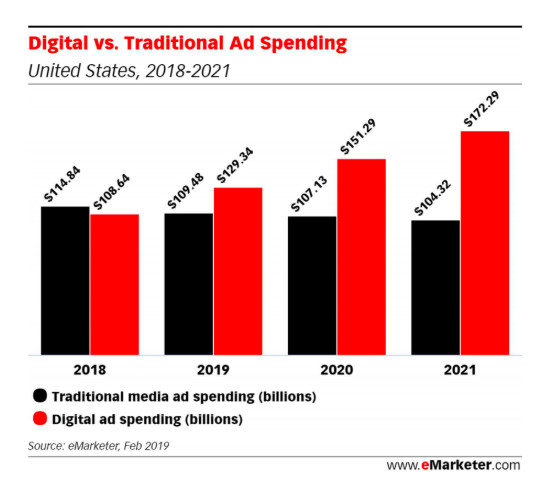
Digital advertising is an amazing business. Every second of the day Google and Facebook are serving ads to their users on behalf of advertisers paying out on every click. The more effectively they convince users to click these ads the more each one sells for. The supply of ads will always exist so long as they have users on their platform. As the shift away from traditional advertising continues, other firms have begun to realize that a piece of this ever-growing market is up for the taking. Microsoft has Bing and Linkedin. Apple has a stranglehold over 1 billion smartphone users–Apple News, the app store–both offer very lucrative advertising channels. Amazon has the largest retail platform in the world with over 200 million paying Prime subscribers and millions of active sellers. Even Walmart has followed Amazon’s lead and is selling ads through their new ‘Walmart Connect’ digital ad marketplace. The market for digital advertising is on track to double that of traditional advertising in the coming years.

Last April Apple made a sweeping change across iOS that required developers to ask for permission to track user activity across apps. For those unaware of our current surveillance capitalist hellscape, let me explain exactly how this has impacted developers on iOS. When you use apps on your iPhone like Instagram or Snapchat, these companies used to be able to sift through all of the data you have created in your time on every single app on your phone. Being able to use this massive trove of data to better serve ads was vitally important for these companies. For example, Yoga studios could serve ads to people who are interested in yoga, who live within a certain area, and have kids. Only having the user data that your app generates makes for ads that are less specific to each user and therefore less appealing to advertisers. Companies like Facebook have a wealth of data about you from their own app they still miss out on significant targeting information due to the lack of access to cross-app tracking.

Amazon

Amazon is mainly thought of in the context of their retail operation and AWS they have been silently building a solid advertising business on the side designated under “Other”. This business rose 87% y/y to $6.9 Billion in revenue. Which is a relatively small number considering Amazon is a company with yearly TTM revenue of $443 Billion. This advertising business is extremely scalable though. Amazon has a platform of 200 Million Prime users, and years of data on them to boot, as well as the millions of daily viewers on their video game streaming platform, Twitch.

Amazon has such a unique opportunity when it comes to monetizing the attention of its users. Everything inside of Amazon’s ecosystem is monetizable through digital advertising. The company is spending more and more to acquire broadcast rights including paying $1 Billion per year for exclusive rights to Thursday night football between 2022 and 2033. The company just acquired MGM for $8 Billion and is in talks to acquire NFL Sunday Ticket from Directv. If both of these deals go through it will give Amazon’s platforms even more eyeballs than before. Every deal they make will dwindle down their near $90 Billion cash stack, but it will more than makeup for it in viewership. Other media outfits like Disney, Warnermedia, and Viacom are not able to cut these massive checks as they only have a fraction of Amazon’s cash, but they also have commitments to their own content flywheels.

Microsoft

In early 2021 Microsoft held talks with social media firm Pinterest about an acquisition priced at $51 Billion. That represents only a minute percentage of Microsoft’s market capitalization, but it tells us what Satya Nadella and Co. think about the digital advertising space. Although it would have been a boon largely just to get Pinterest to move from AWS to Azure it is also a meaningful vote of confidence for Pinterest’s business model and digital advertising in general. M&A talks like this show that big-time industry players see the industry continuing to grow well into the future.

It is also worth mentioning that Microsoft’s largest acquisition ever is Linkedin. In 2016 the company spent around $26 Billion to acquire the professional social networking site. Linkedin’s revenue is only partially attributed to advertising (around 20%) it is still worthwhile to note that the company was a very attractive acquisition target due to its treasure trove of data on millions of working professionals.

Microsoft may not be purely monetizing this user data with advertising right away, but it will surely help them in their new push towards creating a more social-friendly operating system. Microsoft Start will be packaged with Windows 11 and Linkedin’s user data will absolutely be used to cultivate advertisements to windows users.

Apple

Apple has been praised over the last few years for its fidelity to its users’ privacy. The firm has done some remarkable things to protect the privacy of its users. Despite that, it has been slowly building a digital advertising business that continues to bolster revenues in its services segment. The fact that Apple can simultaneously hit its competition by not allowing cross-app tracking, but also build its own multi-billion dollar advertising business says all you need to know about their customer base. People are so completely locked into the Apple “walled garden” that apple can criticize others for making their money through advertising, yet at the same time build a business serving ads to the same people whose data they were trying to “protect” with the iOS cross-app tracking update.

Evercore ISI analyst Amit Daryanani has projected that Apple’s advertising revenue will rise from $2 billion this year to $20 Billion in 2025. At this rate by 2025 advertising would account for 17% of services revenue and around 5% of total revenue to the firm. The high margin profile of the business would also add $.50 per share EPS contribution according to Daryanani. Even if these projections seem a bit rosy, I would argue that even if the numbers are a bit high it illustrates Apple’s ability to continually pull levers to grow their business. There are now over 1 billion iPhone users worldwide. The kind of people who are willing to pay the Apple premium for these devices are the exact kind of people advertisers want access to; evidenced by the hit Facebook took in response to not being able to track iPhone users across apps. Over the next decade, as services become a larger and larger part of Apple’s revenue base be sure to watch out for exactly what is driving this growth; I predict Apple’s advertising growth to outpace the rest of the speedy growth already seen in other pieces of the services segment.

Other playersIt is also worth mentioning that there are players outside of the ultra mega-cap tech names that are chipping away at the Google/Facebook digital advertising duopoly. Walmart has been building out ‘Walmart Connect’ an advertising business that is up 95% over a year ago this past quarter. Not to mention the growth of 170% in active advertisers on the platform.

Smaller social media firms like Snapchat and Pinterest are progressively improving their appeal to advertisers, evidenced by their rapidly growing ARPU numbers. Snap has grown ARPU from $1.91 in Q2 2020 to 3.35 in Q2 2021, representing an increase of more than 75% in one year. Advertisers are noticing the power in their platform and have continued to contribute more advertising dollars to it.

Conclusion

As of right now Google and Facebook are as close to a true duopoly as you can be in digital advertising. As this decade presses on I am certain their market-share will get compressed, but also digital ad budgets will continue to grow alongside that. As competition heats up in the space keep your eyes out for who is growing revenue on their ad platform the quickest, but also who is keeping advertisers the happiest. The number of users a product attracts is a hot commodity to be sure, but the real customer is the advertiser. If they are happy the company will be happy.

Uber: Unsolvable Problems

Originally published 2021-10-24

Uber’s business model is flawed. I am sure you’ve heard that there is an ever-growing number of tech companies that have yet to make a yearly profit, this is the case for Uber, but it goes much deeper.

The only two levers Uber currently has to pull in the mission to achieve positive adjusted EBITDA (earnings before interest, taxes, debt, and amortization) are capturing more of the cost of each ride (i.e. take rate) or increasing prices. Numerous other one-time events allow them to have positive EPS for a quarter, for example, selling of their self-driving unit late last year or recognizing gains from the DiDi IPO. But if they are to consistently drive margin improvement it will always come at the expense of the individual driver.

Labor will eternally be at odds with management. This can be said for many industries, but with Uber, it will be an even more formidable challenge. Uber bulls need to take a serious look at exactly how they see this firm scaling into the future in the face of powerful headwinds that I will outline ahead.

Regulation

Labor wins in several international markets will continue to weigh on Uber’s bottom line. The UK’s highest court has ruled that drivers must be classified as workers instead of private contractors. This has serious implications for the industry at large in the near to medium term, but as of right now Uber is taking the brunt of the pain in the country. Management has even gone so far as to say that it wants other rideshare companies to be held to this standard. Uber’s regional manager of the region, Jamie Heywood, has come out in favor of industry-wide adoption of this most recent pension scheme that Uber has been pulled into by the ruling. It is plain to see that if Uber is the only rideshare firm held to this standard they will not be able to price as competitively as other firms.

Even moving past the UK’s ruling for the moment there are other rulings that have come down against Uber in recent months. The Amsterdam District court sided with unions against Uber in a case that classifies their drivers as employees. Although Uber intends to fight the ruling it is yet another domino falling in favor of drivers worldwide. The UK and the Netherlands may seem like minuscule markets when it comes to Uber’s global market dominance, but rulings like this are showing that rideshare drivers have a strong argument for being classified as employees.

The rulings mentioned above are relatively easy for Uber bulls to brush off as they are in relatively small markets; Uber’s core revenue drivers are outside of EMEA, but even local governments and courts in the States have become sympathetic to drivers.

Prop 22, a ballot measure that passed last November in California, allowed Uber to continue to operate in the state under the notion that drivers would be classified as independent contractors was overturned by the California Supreme Court. Uber, Lyft, and Doordash collectively spent $200 million to get this bill passed. And it worked, up until this most recent ruling. An overturning of prop 22 sets the stage for similar fights country-wide.

Certain city governments across the country have begun attacking the eats business model as well. NYC has placed a cap on delivery and marketing fees on food delivery companies. Doordash and Uber are fighting this bill, but as it has already taken effect, each day that passes these firms are missing out on significant revenues.

Labor Market

As wages continue to inflate across the board Uber drivers seem to be noticing that even upon the return of pre-pandemic rideshare demand there are significantly better options to earn a living. Employers are offering a slew of benefits to attract new employees, especially coming into the holiday season. Several low-wage employers are offering tuition benefits, increased base wages, and one-time signing bonuses to attract unskilled labor. Uber definitely has the appeal of working on your own schedule, but as federal unemployment benefits run out Uber will have to continually shell out driver bonuses to keep up with the current explosion in rideshare demand.

Outside of this tight labor market Uber also needs to worry about competing with itself for drivers. Uber Eats became a much more attractive option for gig workers during the pandemic; even as demand for food delivery levels off drivers may be hesitant to return to driving. New York City has rolled out protections for delivery workers that do not include any stipulations for rideshare drivers. Not to mention food delivery can be much more lucrative when done in a city without a car–this could potentially serve to increase wait times for rides within some cities.

AV Adoption

Many Uber bulls seem to believe that autonomous driving technology will be the saving grace of the firm. I am quite skeptical about Uber’s ability to roll out this technology at scale when we reach that point. Obviously, the margins of operating an AV fleet will be much more lucrative than a driver-operated fleet, but how exactly will Uber be financing this fleet?

Uber’s current debt load tells me that even with the projected EBITDA profitability expected this coming quarter they will not have the funds to finance a fleet capable of competing with the litany of other AV players. Yes, Uber has a significant stake in Aurora–one of the few pure-play self-driving names. Aurora may partner with Uber in creating an AV fleet for their platform, but how exactly does Dara plan on financing this fleet? The competition in this space has players with both extremely deep pockets and manufacturing expertise. Alphabet, GM, and Intel Mobileye have all struck up partnerships with cities to begin rolling out the very beginning of their future autonomous dream. Alphabet, parent company of AV leader Waymo, has a $135 Billion cash stack; not to mention partnerships with numerous large auto manufacturers. GM sold 6.83 million automobiles in 2020, even in a challenging auto market and a chip shortage. Cruise and Waymo have begun rolling out fleets in San Francisco and Cruise has a deal to begin operations of a fleet in Dubai in 2023.

I understand that Uber has a significant moat in the rideshare space at present, but I do not understand why when these fleets begin to spread city to city Uber will be able to capture significant market share against competing firms.

Investments

The pandemic caused Uber to shed its most unprofitable units and focus wholly on profitability. Late in 2020, they sold off both their self-driving unit to Aurora as well as their flying taxi unit to Joby Aviation. Both of these deals allowed for Uber to build large stakes in both companies; not to mention two seats on Aurora’s board.

Uber’s equity portfolio has significant risks as well. For one, the largest holding is DiDi, Uber’s consolation prize for backing out of the Chinese ride-share market. DiDi shares many business model risks with Uber, but with Beijing looking into taking control of DiDi there is a chance that their position in the company may lose significant value in the future.

Many of Uber’s portfolio companies could potentially grow into large companies one day. If we are to assume Uber will continue burning cash these positions will likely be trimmed when Uber inevitably requires fresh capital.

Why I might be wrong

Uber’s incredibly strong brand keeps it top of mind for anyone looking to get anywhere. If they are able to execute on growing the business sustainably (i.e profitably) they will be an enduring brand in mobility.

Despite immense and growing regulatory pressure, it seems that the gig economy is still in its early innings of growth. If Uber is able to sustain itself through the current tight labor market and gig work opportunities continue to increase, I can see Uber being able to traverse the hazardous regulatory environment they are currently in.

Uber has been developing a SaaS offering for pubic transit agencies. If they can successfully roll out this platform to cities nationwide we could see Uber developing what could be analogized to Amazon’s AWS. Uber has ungodly amounts of transportation data that could be used to optimize public transportation in cities around the world. Compared to Uber’s other business units (Mobility, Eats, and Freight) this business would have a much more attractive margin profile and be much more easily scalable. Time will tell how well this product succeeds, as of now it is too early to make any kind of sweeping predictions.

Uber has a near $15 Billion equity portfolio. If these companies continue to grow and fetch higher and higher valuations the portfolio could end up becoming an even larger percentage of Uber’s cap table. Unlikely I know, but there are a number of very exciting companies on this list. Singaporean super-app, Grab, has a massive runway for growth in Southeast Asia. Joby Aviation is the industry leader in EVTOL technology(Electric Vertical Take-Off and Landing) and could potentially revolutionize the mobility space.

Dara Khosrowshahi is a talented manager and his experience growing Expedia through M&A is worth noting when analyzing whether or not he will succeed as Uber’s CEO. He has weathered the pandemic admirably; building Eats into an almost $4 Billion revenue business in 2020 is no small feat. If ride-sharing and delivery continue to consolidate into winner-take-all businesses–Dara’s abilities as a deal maker could work in Uber’s favor. Although if these acquisitions simply increase Uber’s market share without firming up their bottom line, I do not see this as being a sustainable path for generating shareholder value.

Final Thoughts

When it really comes down to it I just do not see Uber’s business model as attractive. Each dollar that gets pulled to the bottom line is a dollar not going into the pocket of a driver. Uber will likely be able to generate EBITDA (earnings before interest, taxes, depreciation, and amortization) profitability in the coming quarters, but I fail to see this as a worthwhile point for a bull-case.

AV adoption, however far away it may be, presents an existential risk to Uber. In the next decade, autonomous ride-hailing will be a highly cost-competitive business. Deep-pocketed players are in the game and they have significantly more resources than Uber does.

I am not the stick-in-the-mud investor who cares strictly about near-term profits. When we think about high-growth tech names we have to consider factors outside of profitability. With Uber, the lack of near-term profitability would be easily bearable if we were able to look forward to a time when Uber can generate consistent earnings and margin growth. Alas, due to the firm’s dependence on drivers it will likely never have an attractive margin profile or a path to consistent year-on-year EPS growth.

$SQ v. $PYPL: I’ve Seen This One Before

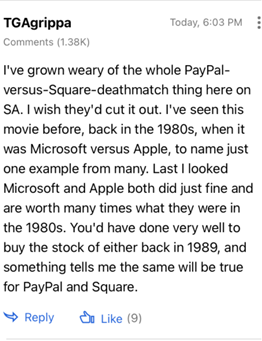
A few weeks ago I read this comment on a Seekingalpha article that resonated with something I have been thinking about for a while. (above)

The relationship between two of the most talked about fintech players strikes me as quite like the relationship between the two biggest firms in the original PC revolution. Square is the closed end system led by its brash yet effective founder. Paypal is the partnership heavy and well-run operation looking to suck up as much marketshare as possible. Sound familiar?

Businesses

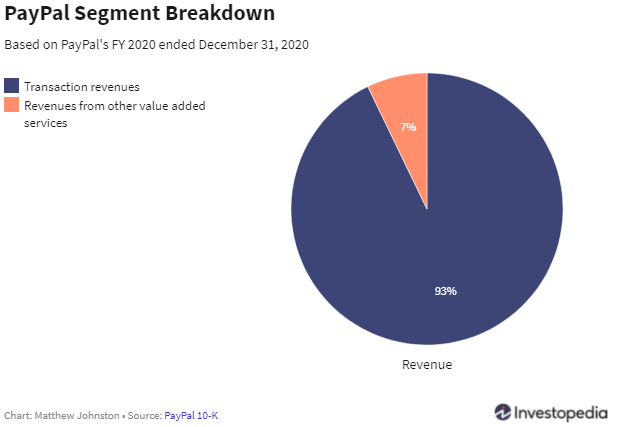
Paypal was founded initially as two companies in the late 1990s. Confinity, a software company founded by current top venture capitalist and de-facto leader of the Paypal Mafia, Peter Thiel, as well as Luke Nosek and Max Levchin, current CEO of buy-now-pay-later company Affirm. Confinity was later merged with x.com, one of the first digital banks founded by none other than Elon musk and his business partner Greg Kouri. Today Paypal generates the lion’s share of its revenues from transaction fees through partnering with any and every merchant they can.

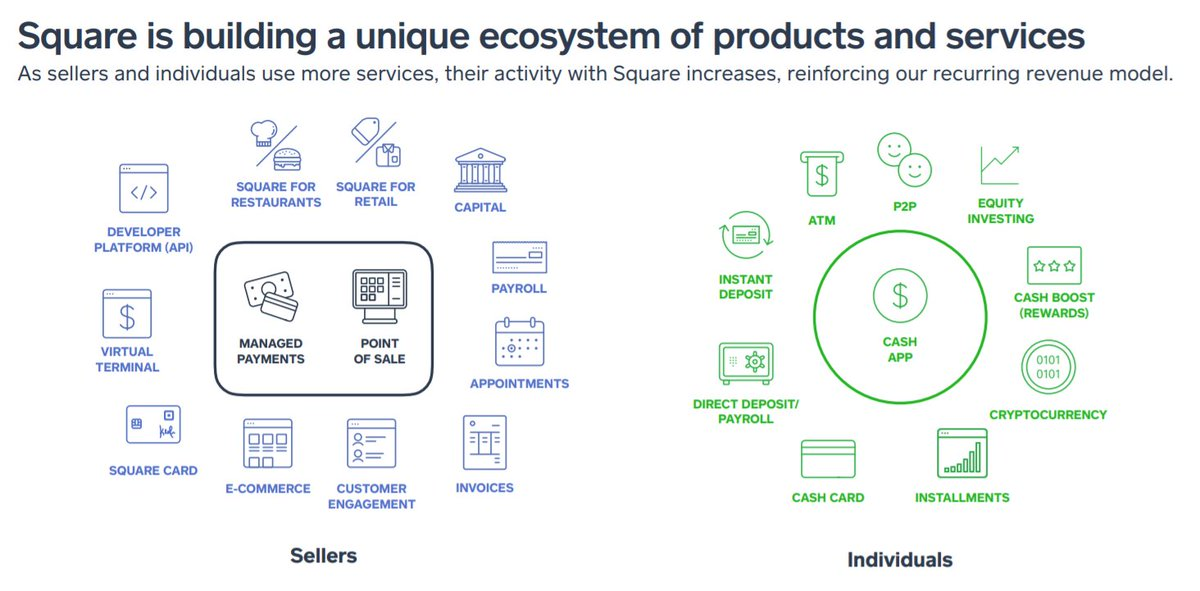
Square was founded in 2009 by Jack Dorsey, Jim Mckelvey, and Tristan O’Tierney. After having some trouble being unable to complete a transaction selling a glass faucet in his store, Mckelvey enlisted Dorsey to help him develop a platform through which small businesses could easily accept credit card payments. Since then Square has evolved into a digital banking behemoth. The creation of cashapp in 2013 has only added to Squares extreme growth. The company is creating a full suite of financial products for consumers and SMBs alike.

Leadership

Although Apple has been without its founder/CEO for many years now, the company’s success can be traced back to Steve Jobs and the iPhone. Very much the same could be said for the extreme growth of Square. If not for Jack Dorsey, Square may have been just an idea for a little credit card reader that you plug into your iPhone.

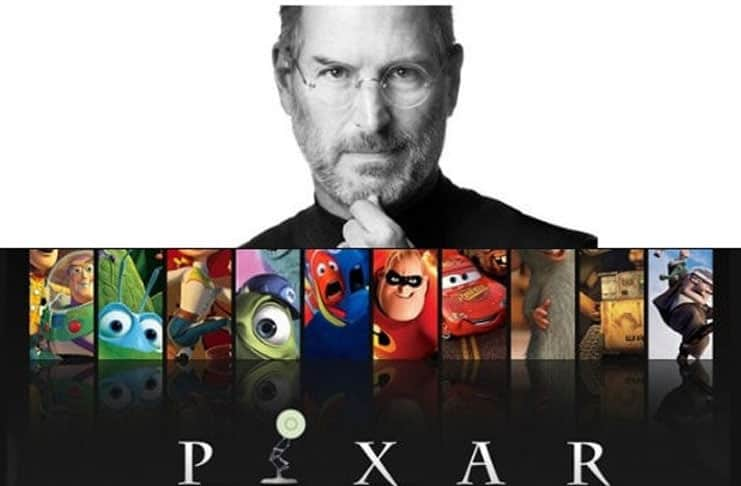
Although Apple fanatics will likely recoil at such a comparison, it is quite a feat to be able to build more than one multibillion-dollar enterprise. Aside from his accomplishments with Apple and NEXT, Jobs was able to lead Pixar from 8-figure Lucasfilm spinout to a $7.4 Billion acquisition by the Walt Disney Company. And in so doing completely revolutionizing feature film animation.

Jack, however eccentric he may be, has also built more than one company that has had an extreme impact on the way we live our lives. Although Twitter has not grown into the size of other social media behemoths like Facebook and TikTok, building more than one multi-billion-dollar business is something people should take notice of. It is proof that Dorsey and Jobs aren’t just two of the luckiest people on the planet. They understand what people want and they created fortunes out of giving it to them. Building a single billion-dollar firm could always be attributed to luck in some way, but two or three? I do not think it is possible for a single person to be that lucky.

Partnerships

Considering the genesis of Paypal is that of a payment processor for Ebay power-users (similar to how Microsoft began out of a partnership with Altair); it tracks that their business has grown organically through partnering with any and every online merchant possible. Paypal has partnered with numerous financial services companies to expand its customer network and ensure that it is seen as the go to toll booth for internet commerce. Not only is Paypal one of the top payment options on the largest ecommerce platforms in the world (i.e. Amazon, Shopify, Alibaba) it is also partnered with the major credit card companies. Furthering partnerships on both sides of the transaction allows Paypal to be a facilitator of online payments; much in the same way that Microsoft was and is the facilitator of the software industry, through not only selling software itself, but selling the foundation upon which the software is built i.e. Windows. Microsoft has countless partnerships with developers the world over who build wonderful products for their platform and in turn consumers and businesses buy computers running their OS to access these products.

Square and their two ecosystems, Seller and Cashapp, rely far less on partnerships and much more on organic growth. Similar, to how Apple grew into the largest company in the world by cultivating their ‘walled garden’. Personal computing is a vastly different industry than digital payments though, so Square has found partners willing to live inside of their ecosystem. For example, Square works with numerous partners willing to give discounts to cashapp users as well as many developers who are using Square’s API to build out products on their platform. But Square controls everything. Connecting Cashapp to the seller ecosystem will allow them to create immense shareholder value through pricing power and network effects. Each new member of the ecosystem benefits every merchant and consumer on the platform. The more products and services built out on Square’s platforms, the more value will be derived by each member of the network.

Not a perfect analogy

Obviously no analogy is perfect, but what I wish to illustrate here is more so that in getting caught up in the competitive side of capitalism/stock-picking we may be missing the forest for the trees. Apple and Microsoft may have been in heated competition (and still are to some degree) for the last forty years, but it turns out that there is plenty of room for both. Apple and Microsoft are currently the two largest companies in the world by market capitalization. As TGAgrippa said in his comment, this deathmatch thing is getting quite tired. As far as my investment philosophy is concerned, I see no issue taking out substantive long positions in both companies. They both have wonderful business models with many years long growth runways ahead of them.

Conclusion

So long as trends toward the digitization of our economy do not deteriorate Paypal and Square will continue to experience rapid secular growth. And although they may compete with one another for payment processing and digital wallet customers there is more than enough TAAM for each of them to conquer. In closing I would recommend heeding TGAgrippa’s advice, worry a lot less about these payment processors eating each other’s lunch and enjoy the ride on the digital payment revolution.