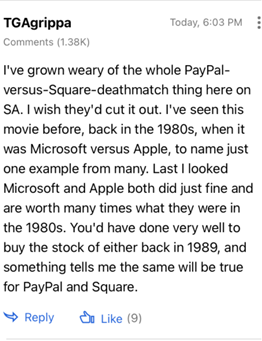
A few weeks ago I read this comment on a Seekingalpha article that resonated with something I have been thinking about for a while. (above)
The relationship between two of the most talked about fintech players strikes me as quite like the relationship between the two biggest firms in the original PC revolution. Square is the closed end system led by its brash yet effective founder. Paypal is the partnership heavy and well-run operation looking to suck up as much marketshare as possible. Sound familiar?
Businesses
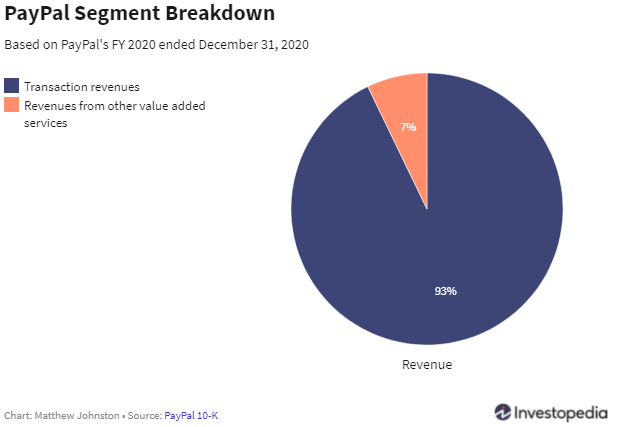
Paypal was founded initially as two companies in the late 1990s. Confinity, a software company founded by current top venture capitalist and de-facto leader of the Paypal Mafia, Peter Thiel, as well as Luke Nosek and Max Levchin, current CEO of buy-now-pay-later company Affirm. Confinity was later merged with x.com, one of the first digital banks founded by none other than Elon musk and his business partner Greg Kouri. Today Paypal generates the lion’s share of its revenues from transaction fees through partnering with any and every merchant they can.
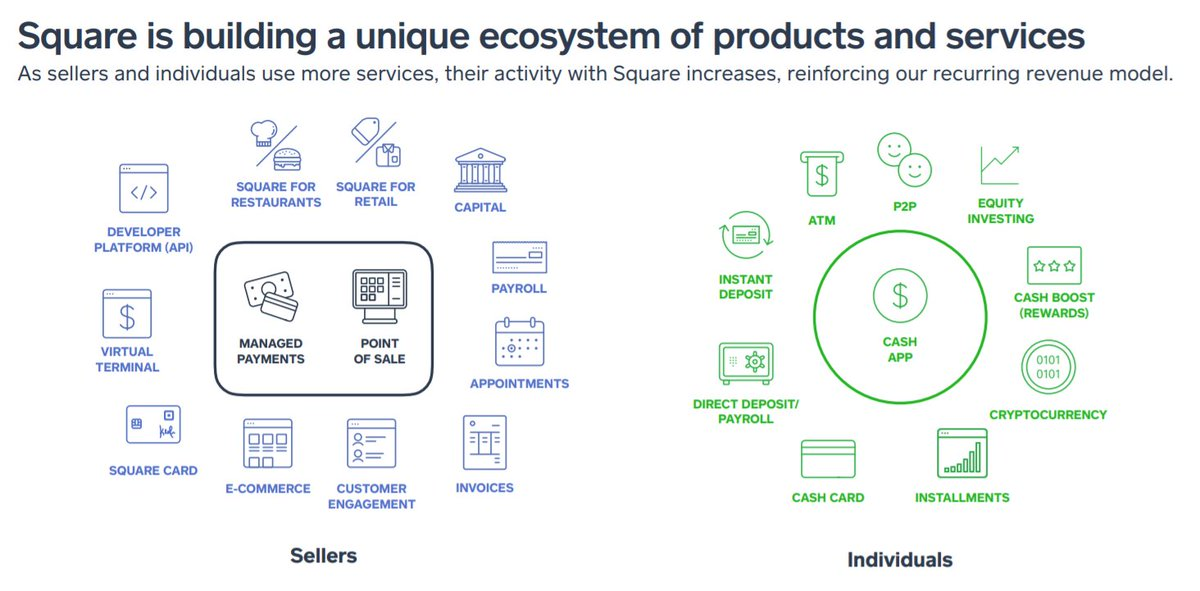
Square was founded in 2009 by Jack Dorsey, Jim Mckelvey, and Tristan O’Tierney. After having some trouble being unable to complete a transaction selling a glass faucet in his store, Mckelvey enlisted Dorsey to help him develop a platform through which small businesses could easily accept credit card payments. Since then Square has evolved into a digital banking behemoth. The creation of cashapp in 2013 has only added to Squares extreme growth. The company is creating a full suite of financial products for consumers and SMBs alike.
Leadership
Although Apple has been without its founder/CEO for many years now, the company’s success can be traced back to Steve Jobs and the iPhone. Very much the same could be said for the extreme growth of Square. If not for Jack Dorsey, Square may have been just an idea for a little credit card reader that you plug into your iPhone.
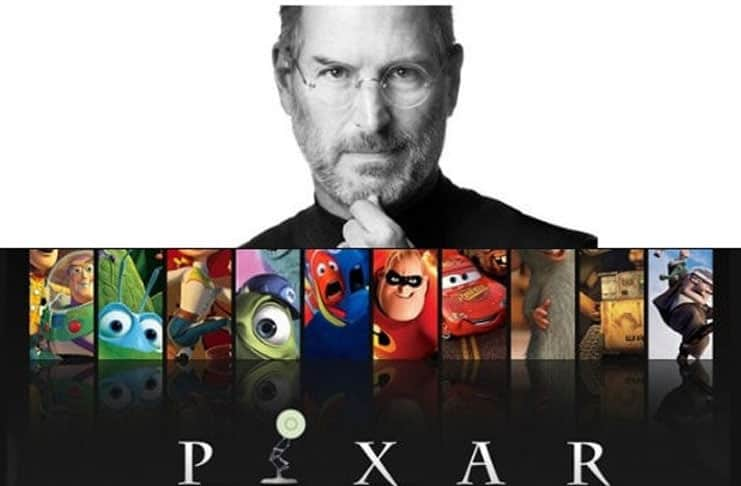
Although Apple fanatics will likely recoil at such a comparison, it is quite a feat to be able to build more than one multibillion-dollar enterprise. Aside from his accomplishments with Apple and NEXT, Jobs was able to lead Pixar from 8-figure Lucasfilm spinout to a $7.4 Billion acquisition by the Walt Disney Company. And in so doing completely revolutionizing feature film animation.
Jack, however eccentric he may be, has also built more than one company that has had an extreme impact on the way we live our lives. Although Twitter has not grown into the size of other social media behemoths like Facebook and TikTok, building more than one multi-billion-dollar business is something people should take notice of. It is proof that Dorsey and Jobs aren’t just two of the luckiest people on the planet. They understand what people want and they created fortunes out of giving it to them. Building a single billion-dollar firm could always be attributed to luck in some way, but two or three? I do not think it is possible for a single person to be that lucky.
Partnerships
Considering the genesis of Paypal is that of a payment processor for Ebay power-users (similar to how Microsoft began out of a partnership with Altair); it tracks that their business has grown organically through partnering with any and every online merchant possible. Paypal has partnered with numerous financial services companies to expand its customer network and ensure that it is seen as the go to toll booth for internet commerce. Not only is Paypal one of the top payment options on the largest ecommerce platforms in the world (i.e. Amazon, Shopify, Alibaba) it is also partnered with the major credit card companies. Furthering partnerships on both sides of the transaction allows Paypal to be a facilitator of online payments; much in the same way that Microsoft was and is the facilitator of the software industry, through not only selling software itself, but selling the foundation upon which the software is built i.e. Windows. Microsoft has countless partnerships with developers the world over who build wonderful products for their platform and in turn consumers and businesses buy computers running their OS to access these products.

Square and their two ecosystems, Seller and Cashapp, rely far less on partnerships and much more on organic growth. Similar, to how Apple grew into the largest company in the world by cultivating their ‘walled garden’. Personal computing is a vastly different industry than digital payments though, so Square has found partners willing to live inside of their ecosystem. For example, Square works with numerous partners willing to give discounts to cashapp users as well as many developers who are using Square’s API to build out products on their platform. But Square controls everything. Connecting Cashapp to the seller ecosystem will allow them to create immense shareholder value through pricing power and network effects. Each new member of the ecosystem benefits every merchant and consumer on the platform. The more products and services built out on Square’s platforms, the more value will be derived by each member of the network.
Not a perfect analogy
Obviously no analogy is perfect, but what I wish to illustrate here is more so that in getting caught up in the competitive side of capitalism/stock-picking we may be missing the forest for the trees. Apple and Microsoft may have been in heated competition (and still are to some degree) for the last forty years, but it turns out that there is plenty of room for both. Apple and Microsoft are currently the two largest companies in the world by market capitalization. As TGAgrippa said in his comment, this deathmatch thing is getting quite tired. As far as my investment philosophy is concerned, I see no issue taking out substantive long positions in both companies. They both have wonderful business models with many years long growth runways ahead of them.
Conclusion
So long as trends toward the digitization of our economy do not deteriorate Paypal and Square will continue to experience rapid secular growth. And although they may compete with one another for payment processing and digital wallet customers there is more than enough TAAM for each of them to conquer. In closing I would recommend heeding TGAgrippa’s advice, worry a lot less about these payment processors eating each other’s lunch and enjoy the ride on the digital payment revolution.

 Trying to Understand